 This photo was taken by William Warby on Pexels.
Welcome to the beating heart of London, where centuries of tradition come alive in a dazzling display of pageantry. If you have ever stood in the crisp British air, watching the scarlet tunics and towering bearskin hats march in perfect unison, you know that the Changing of the Guard is more than just a tourist attraction—it is a living piece of history. In this post, we will unlock the secrets behind this iconic ritual, tracing its fascinating origins from ancient military duties to today's ceremonial spectacle. Whether you are curious about the intricate steps involved or seeking the perfect vantage point to capture the moment, get ready to step inside one of London's most cherished royal traditions.
The Origins of a Royal Tradition
The Changing of the Guard, a spectacle that has captivated visitors for centuries, traces its roots back to the 17th century when the need for a permanent standing army in London became paramount. Originally established by King Charles II in 1660 following the restoration of the monarchy, this daily ritual was designed to ensure the security of the monarch's residences and to maintain order within the capital. Over the decades, the ceremony evolved from a purely functional military duty into a highly choreographed display of pageantry, reflecting the grandeur and continuity of the British Crown while serving as a living link to our nation's military heritage.
Today, the tradition is most famously performed at Buckingham Palace and Windsor Castle, where the Old Guard hands over responsibility to the New Guard with precise drills and the rhythmic beat of marching boots. While the core purpose remains the changing of the guard post, the event has transformed into one of London's premier tourist attractions, drawing thousands who gather behind the palace railings to witness the vibrant red tunics and towering bearskin hats. Despite modern changes in protocol and occasional cancellations due to weather or state occasions, the ceremony endures as a timeless symbol of royal authority, offering tourists an unforgettable glimpse into the enduring history of the British monarchy.
This
photo was taken by
Paul Julliot on Pexels.
What Happens During the Ceremony
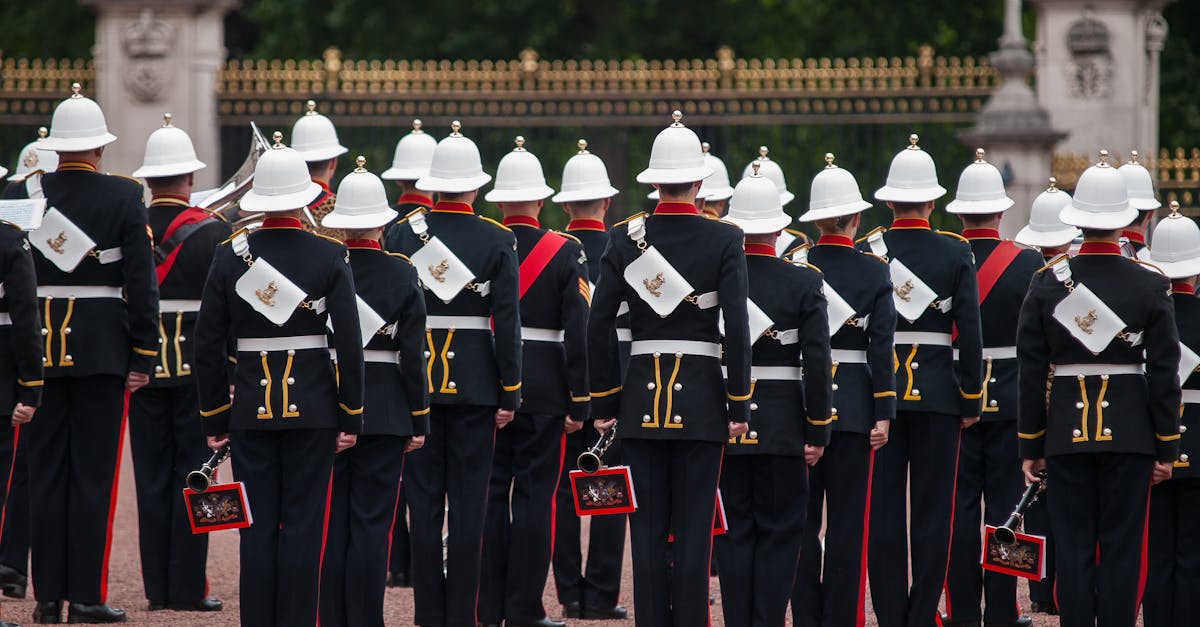
The Changing of the Guard ceremony is a meticulously choreographed spectacle that transforms the courtyard of Buckingham Palace into a living tableau of British tradition. It begins with the arrival of the old guard, dressed in their iconic scarlet tunics and tall bearskin hats, marching in perfect unison to the beat of a drum corps. As the new detachment arrives, often featuring musicians from the Household Division playing lively marches on brass instruments and flutes, the atmosphere shifts from anticipation to solemn precision. The handover itself is a dance of discipline and pageantry, where officers exchange orders and the regiments formally pass the keys to the Queen's House, symbolizing the transfer of responsibility for protecting the monarch.
Following the formal handover, the musical highlight unfolds as the bands perform a repertoire ranging from traditional military marches to popular classics, creating an immersive auditory experience for the thousands of spectators lining the railings. While the soldiers maintain rigid postures during the critical moments, the event offers a unique opportunity to witness the sheer athleticism and endurance required to wear these heavy uniforms while maintaining absolute stillness. For visitors, this ritual serves as more than just a photo opportunity; it is a tangible connection to centuries of history, offering a rare glimpse into the enduring customs that continue to define the royal household in modern London.
This
photo was taken by
BANU FILM ADS on Pexels.
Best Spots to Watch the Guard Change
For the quintessential London experience, nothing beats securing a spot near the main gates of Buckingham Palace around 11:00 AM on ceremony days. While the crowds can be dense, arriving at least an hour early allows you to claim a prime position along the railings where you can witness the intricate footwork and the commanding presence of the Queen's Guard in their iconic bearskin hats. The contrast between the bright red tunics and the solemn silence of the soldiers as they march creates a mesmerizing tableau that feels like stepping back into Victorian times, offering photographers the perfect backdrop for capturing the pageantry against the palace's golden gates.
However, if you wish to avoid the throngs of tourists while still enjoying the spectacle, the Horse Guards Parade on Whitehall offers a more intimate alternative, particularly for those interested in the mounted Life Guards. Here, the atmosphere is slightly more relaxed, allowing you to appreciate the precision of the cavalry horses and the ceremonial drill without being jostled by hundreds of onlookers. Additionally, visiting St James's Park provides a stunning scenic view of the procession moving towards the palace, combining the historical grandeur of the guard change with one of London's most beautiful green spaces, making it an ideal spot for a leisurely stroll before or after the event.

This
photo was taken by
Markus Winkler on Pexels.